1. The Calling – Why You Feel Pulled Toward Do Dham
You know that dull hum of the fluorescent lights in your office? That sound of a thousand text notifications going off at once?
Now, contrast that with the sound of nothing. Just the wind whistling past a jagged, snow-dusted peak.
There’s a moment—maybe it hits you while you’re stuck in traffic, or maybe it’s a sudden, fierce flash just before you fall asleep—where you realize you are desperate to go north. It’s not just travel; it’s a soul-deep, physical ache for the silence and the scale of the Himalayas. You feel pulled, as if by a great, invisible magnet.
This journey, the Do Dham Yatra, is what happens when you finally stop ignoring that ache. It’s where you shed the noise, the screens, and the frantic pace of the city, and remember what it feels like to just be.
I’ve felt the power of these valleys, and I’m telling you: this isn’t a guide on how to book a bus ticket. This is about answering the most important question of your spiritual life — Why must you go?
2. Understanding the Do Dham Yatra
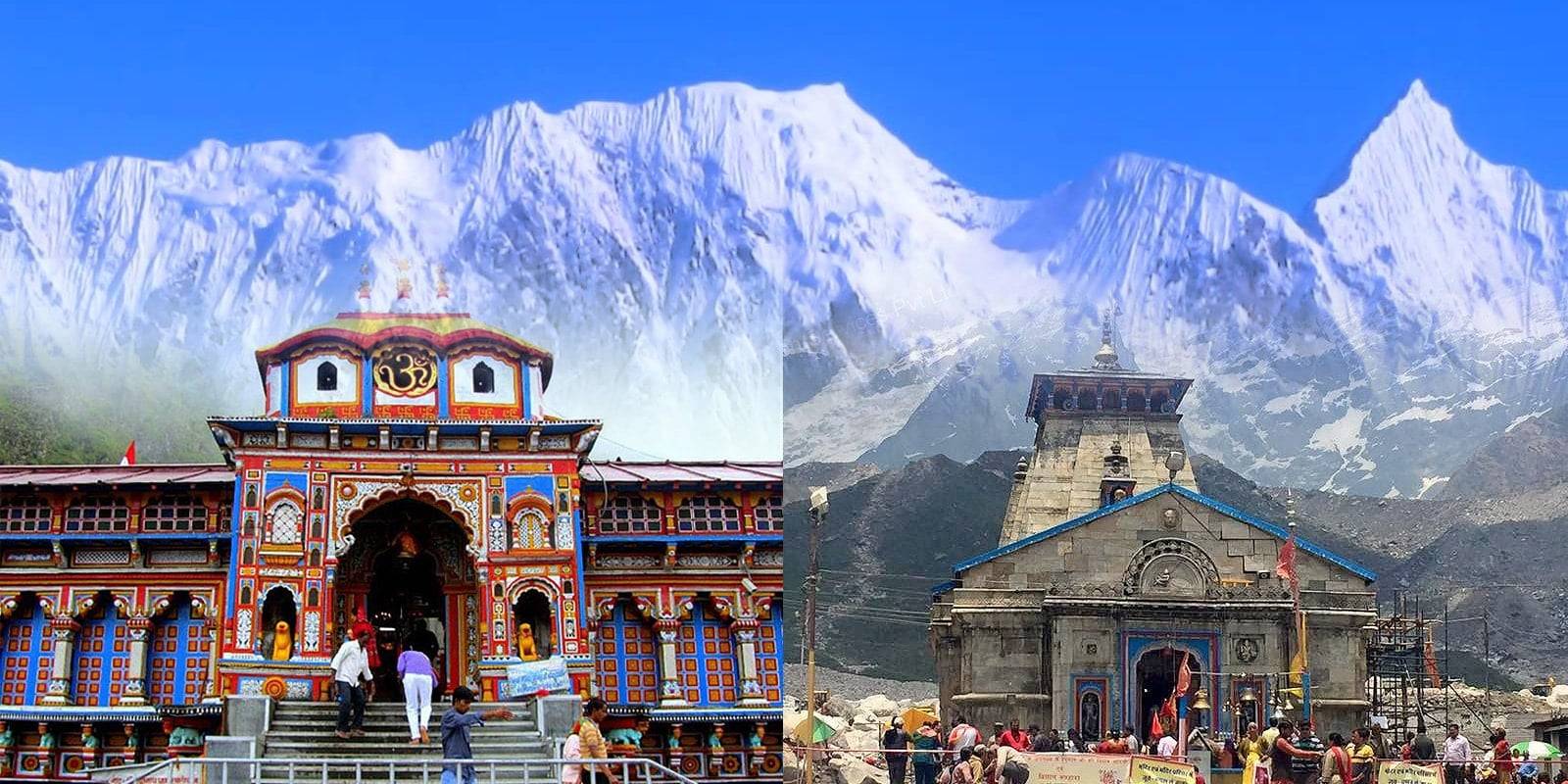
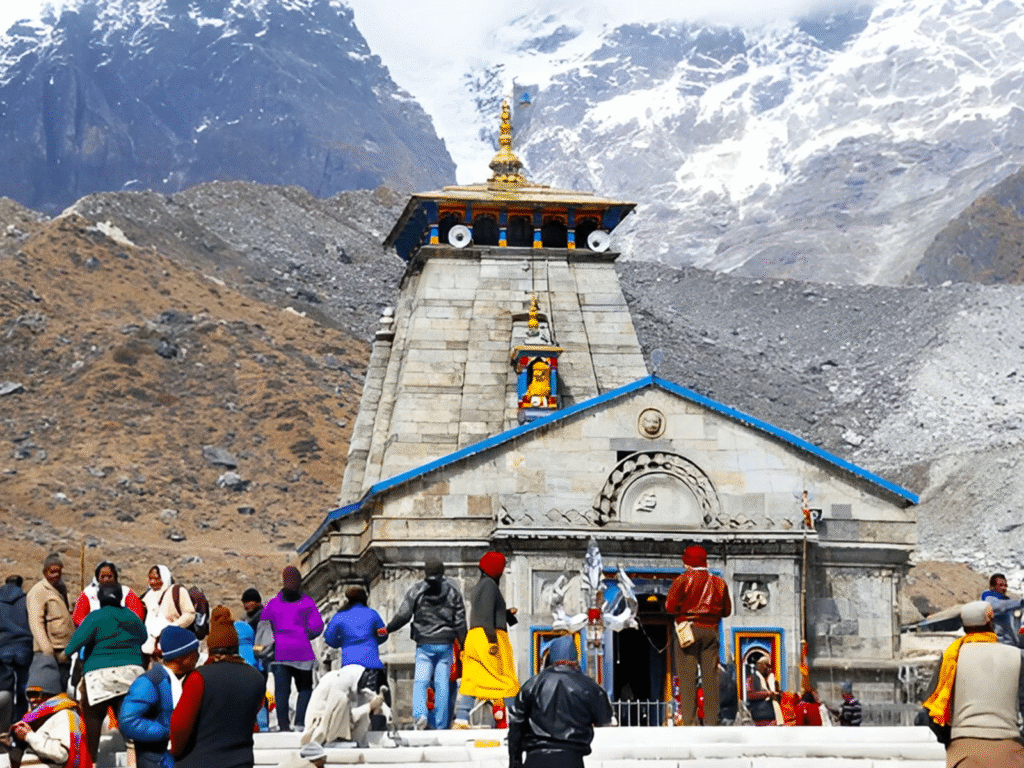
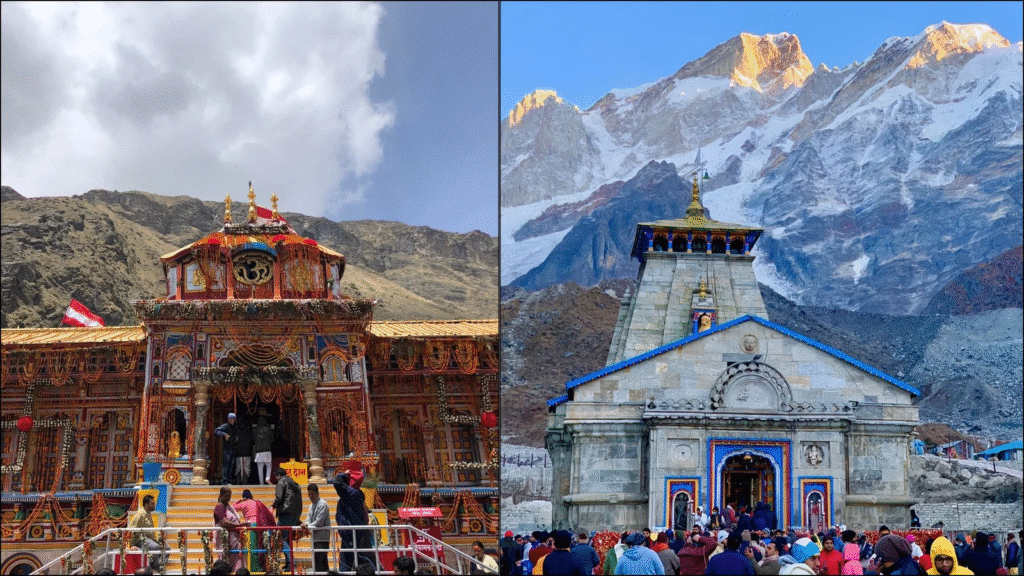
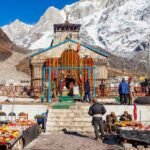
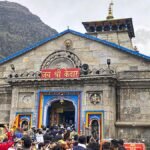
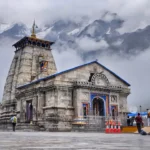
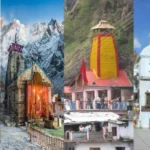
Kedarnath is raw, elemental power — the domain of Lord Shiva. It’s where you face the great transformer, the energy that destroys your illusions. It’s fierce and humbling.
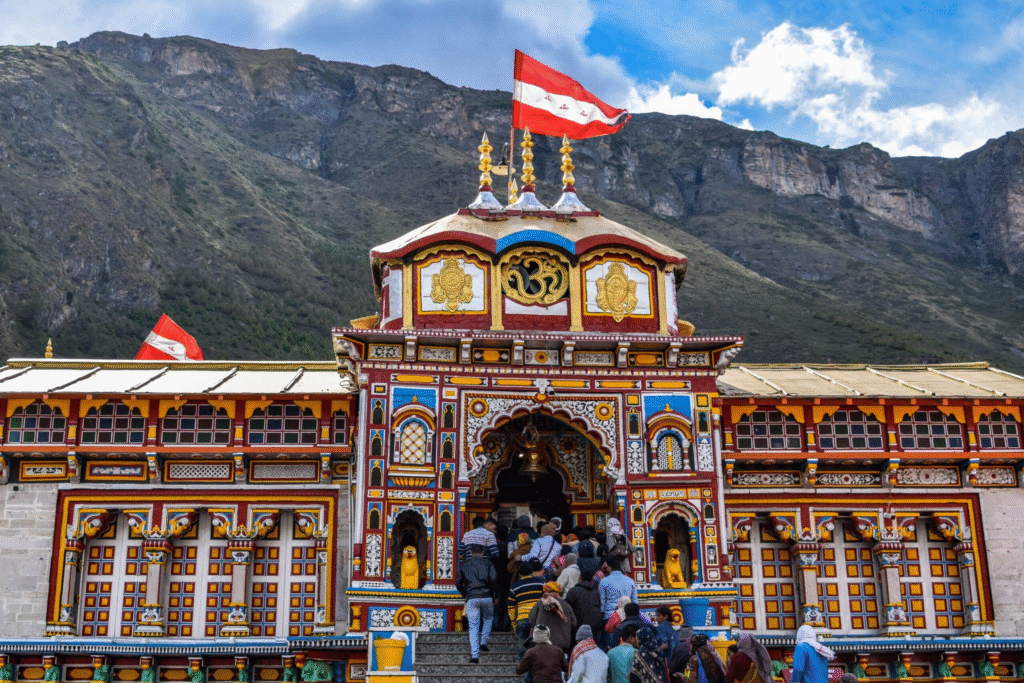
Badrinath is serene, almost gentle — the home of Lord Vishnu. This is the energy that sustains you, the protector that keeps the universe running.
To complete them both in one journey is like balancing your own existence.
3. The Legends – The Mountains Themselves Are Ancient Libraries
The vibe at Kedarnath is intense. You feel the effort of the Pandavas seeking atonement, and the playful, powerful hiding of Lord Shiva as a bull.
When you stand before that rugged, primal Jyotirlinga, you realize this isn’t just a temple; it’s a sacred point where myth and earth meet.
Contrast that with the soft patience of Badrinath. I love the story of Goddess Lakshmi turning into the Badri tree to shield Lord Vishnu from the snow while he meditated.
It’s a place of protection, a comforting blanket thrown over the divine. When you walk, pay attention — every single step echoes with centuries of deep, personal devotion.
4. The Journey – Route, Travel Options, and Your Modern Yatra Experience 🥾
Your physical journey starts where the Ganga kisses the plains — Haridwar or Rishikesh.
From there, you commit to the mountains.
The Ascent to Kedarnath: An Act of Faith
The drive takes you through winding roads to Guptkashi, then on to Gaurikund. That’s where the cars stop and the real journey begins.
The Trek: That 16 km trek is a spiritual furnace. Your legs will burn, your lungs will ache, but you won’t stop. Why?
Because every breath you take is answered by a fellow pilgrim’s chant of ‘Jai Kedarnath!’
Shared smiles, tiny tea stalls, and the sheer will of the people around you — it pulls you up the mountain.
Logistics: Yes, you can be practical!
If time or health is a factor, the helicopter services (from Phata/Sersi) are a godsend.
Just make sure you’ve done your mandatory Yatra e-registration online before you even leave home. It saves so much stress.
Onward to Badrinath
From the Shiva valley, you swing over to the Vishnu territory, often stopping at Joshimath. The atmosphere shifts — it gets greener, the valleys widen, and the mighty Alaknanda river rushes alongside you like a faithful companion.
You pass colorful villages and hear the gentler toll of monastery bells. It’s a journey that cleanses you mile by mile.
5. The Right Time to Go – When the Gods Invite You 🌸
The mountains are only open for visitors for a beautiful, brief period. The gates unlock usually in May and close sharply in October/early November when the first serious snows fall.
The Sweet Spot: Aim for late May/early June or September/early October.
You’ll get clear, crisp skies, comfortable hiking weather, and those breathtaking, unobstructed peak views.
A Simple Rule: Skip July and August.
It’s the monsoon season, and road closures due to landslides aren’t just an inconvenience — they can be genuinely dangerous.
Honestly, the best time to go isn’t entirely about the weather report.
It’s about that moment when you feel an absolute certainty in your heart that this is the year.
6. Beyond the Map – What You Feel on the Way 🧘
Forget the itinerary for a minute. This is the gold.
I want you to travel slowly. Sit by a Prayag (river confluence) and just listen.
Stop and share a tiny, perfect warm tea at 10,000 feet with an elderly local.
Watch the spiritual intensity of a chilly dawn aarti.
The kindness, the effort, the stunning beauty — these are the real treasures.
You carry the warmth of a crackling bonfire back with you, long after the chill leaves your bones.
7. Nearby Wonders & Essential Detours 🏞️
Don’t treat this as a race. The best parts are often found just off the main path.
Near Kedarnath:
Take the short, powerful climb to the Bhairavnath Temple — the view of the entire valley from up there is staggering.
Near Badrinath:
Hike to Mana Village, the last inhabited village on the border. It feels like stepping into a different world.
And you absolutely must take a therapeutic dip in the warm, natural waters of the Tapt Kund before entering the temple.
8. Staying, Eating, and Keeping the Journey Smooth 🎒
You’re not surviving; you’re traveling. The logistics are simpler than you think!
Accommodation:
You’ll find everything from reliable GMVN government lodges (best for booking ahead) to cozy, family-run guesthouses.
Food:
Your body will crave simplicity. Embrace the sattvic meals — warm dal, rice, and roti served with unbelievable kindness.
Always carry cash for the small tea stalls, though bigger towns are getting better with digital payments.
If you don’t want to worry about anything and just want to enjoy the journey you can also contact any tour and travel company like The Mountain Trekker who will take care of everthing from food to stay etc,.
My Essential Packing Reminders:
- Warmth: Forget fashion. Layers, thermals, gloves, and a proper waterproof jacket are non-negotiable.
9. Tips for a Peaceful and Safe Journey 🙏
You have to respect the mountains. They run on a rhythm far older and slower than ours.
Be Prepared:
Get a simple check-up. The altitude is intense, and you need to listen to your body.
Respect the Space:
No plastic littering, dress modestly at the shrines, and please — no loud music.
Breathe:
Be patient with delays. The Himalayas move in divine time, and trying to rush them only brings stress.
Just accept it.
10. The Return – What You Bring Back
When you finally get home, something will have fundamentally shifted. You’ll feel lighter.
Not because your suitcase is empty, but because your spirit has shed a thousand worries up in those valleys.
The Do Dham Yatra doesn’t end when you close your front door.
It stays with you forever — it’s in the quiet resilience you find, the depth of your new prayers, and the entirely new, calmer way you look at the whole beautiful, messy world.
If you loved reading about this Do Dham Guide you might also like Badrinath Guide.



Leave a Reply