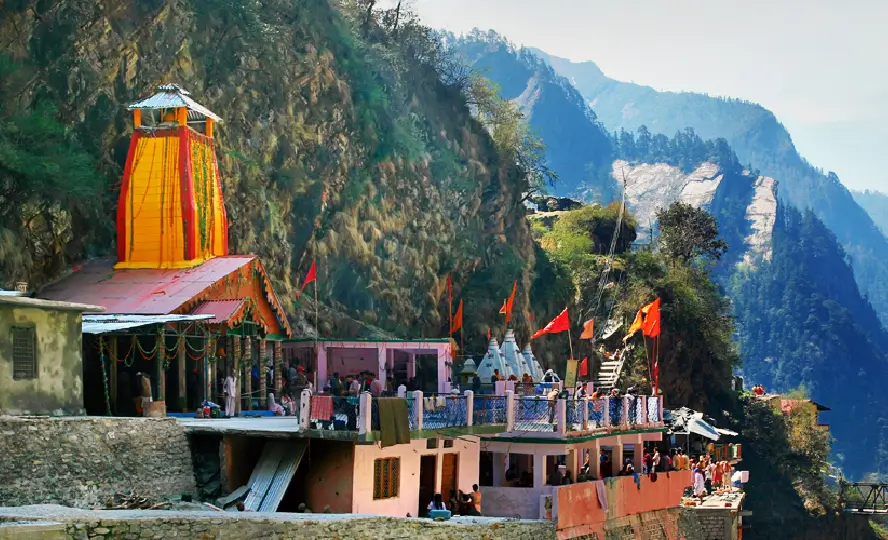
1.The Call of the Mountains
You know that feeling, right? That little, constant ache in your heart that only the mountains can cure. For me, that feeling led me straight to Yamunotri, the holiest of beginnings on the Chhota Char Dham circuit and the beautiful source of the Yamuna River. Honestly, every single step I took on that winding path felt like shedding a layer of my old self—it was a pilgrimage drenched in pure, simple devotion.
I’m guessing your situation is similar to mine: you dream of standing before the Yamunaji Temple, feeling that ancient power, but you’re worried about the cost. Trust me, I was budgeting down to the last rupee! This guide is essentially the little black book of tips I gathered on my own shoestring journey. I’m here to tell you, friend, that the blessings you receive up there are absolutely priceless, and they don’t require a fat wallet.
2. Why Visit Yamunotri: Beyond the Temple
Yamunotri is special because the stories are so deeply rooted. We’re talking about the temple honoring Goddess Yamuna, who the myths say is the daughter of the Sun God Surya. The old belief is that if you take a proper dip in the chilly, holy river up there, it washes away all your sins and ensures a peaceful end when your time comes.
But even setting the deep faith aside, the sheer, raw beauty will stop you in your tracks. Imagine the crisp, thin air stinging your cheeks, the thunderous sound of the river rushing past, and those enormous, snow-dusted peaks standing silent watch. It’s an honest, humble kind of beauty—the type that really settles down into your soul and makes you feel profoundly small and peaceful.
3. Ideal Time to Visit: Timing Your Savings
Look, the temple is generally open from May to October. For the best walking weather, aim for May, June, September, or early October.
Now for my personal Yamunotri Yatra Budget secret: skip the crazy crowds and inflated prices of peak season! This timing also means accommodation owners are more open to giving you a better deal. Just keep in mind that if you choose to travel during the monsoon (July/August), be ready for road delays—a tiny price to pay for extra savings!
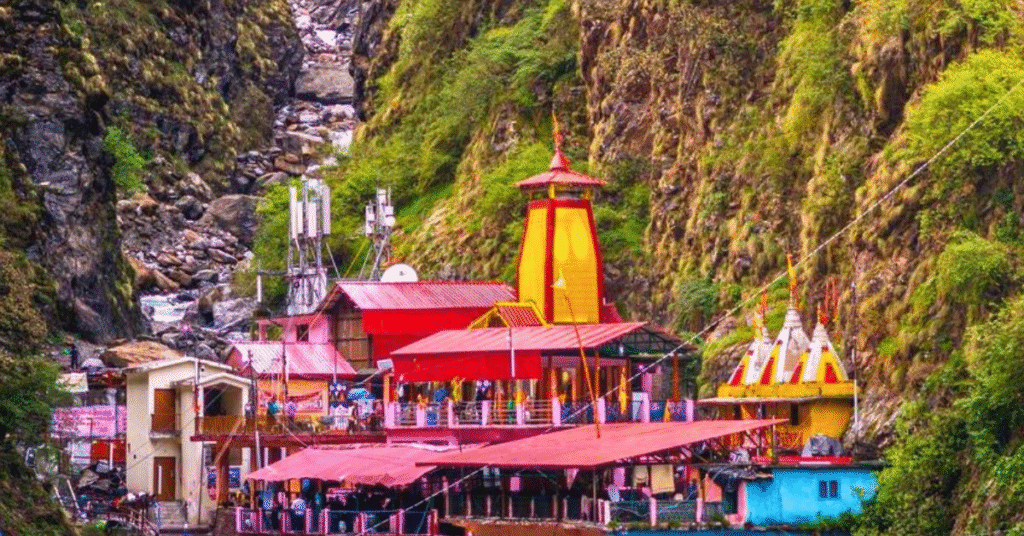
4. How to Reach Yamunotri Yatra Budget
The biggest hack for this trip? Ditch the expensive private taxis and become a champion of shared transport. It genuinely enriches the journey because you meet so many fascinating fellow travelers!
🚌 Part 1: From the Plains to Barkot (The Base)
Your journey starts by catching the cheapest bus (usually state-run ones) or a train from Delhi toward Haridwar or Dehradun. From either of those cities, you need to head for Barkot, our central hub. I found that local or state transport buses are your best bet—they cost maybe ₹400 to ₹700. It’s a bit slow and bumpy, but that’s what authentic mountain travel is all about!
🚗 Part 2: From Barkot to Janki Chatti (The Trek Start)
This is where you make huge savings! Walk straight past the private cabs and head to the Barkot bus stand for the shared jeeps or Sumos. They wait until they fill up and then zoom off. I literally paid ₹150 for my shared jeep and spent the ride chatting and laughing with some local people. The ride takes maybe an hour and a half, depending on how tricky the road is that day.
⛰️ Part 3: The Trek from Janki Chatti to Yamunotri (The Final Ascent)
This is the real heart of the adventure! It’s a 6 km climb uphill. The path is paved, but it’s steep, so take your time. Walking it is 100% free, and the 3 to 5 hours you spend climbing, with those epic views, feels like a massive accomplishment.
If walking just isn’t possible, then choose a pony over a palanquin—it’s the more affordable option. The rates are set by the government, but you can always ask politely at the office. But honestly, if your knees are up for it, use your own two feet! It’s the most fulfilling part of the yatra.
5. Budget Accommodation Options: Sleep Simple
You have to shift your mindset here: this is a pilgrimage, so simple comfort is the goal!
Your absolute lowest-cost options are the Dharamshalas in Barkot or Janki Chatti. They usually offer very basic, clean rooms, sometimes shared, for a tiny fee (think ₹500 to ₹1,000). They are so true to the pilgrim spirit! If you want something a little more reliable, look for GMVN (Garhwal Mandal Vikas Nigam) Guest Houses. They are government-run, clean, and simple, costing a bit more (around ₹1,200 to ₹2,500), but I always found them trustworthy.
My absolute best piece of advice: Stay in Barkot rather than Janki Chatti. Barkot is larger, has more budget rooms, and is often cheaper than the crowded trek-base at Janki Chatti. Just get a simple room in Barkot, leave your big bags there, and take a small day-pack for the trek the next day.
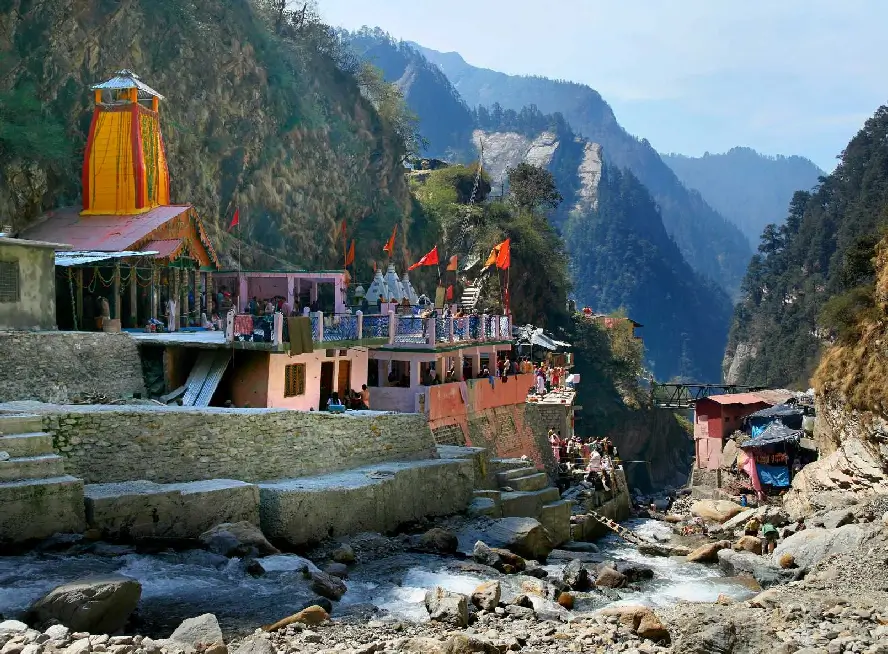
6. Food & Local Cuisine: The Heavenly Simple Meal
Saving money on food is easy if you eat like the locals! The secret is the North Indian Veg Thali (rice, roti, daal, and sabzi). It’s incredibly nutritious, fills you up, and usually costs just ₹150 to ₹300 at any small, clean dhaba. I always look for places packed with local drivers—that’s the sign of good, safe food!
And seriously, after hours of trekking, the simple roti-sabzi with a cup of hot chai tastes like a feast from heaven! Don’t forget to stop at the little stalls along the route for some hot pakoras or maggi—it’s cheap energy and part of the classic mountain experience.
7. Essential Tips to Save Money Like a Pro
To really nail this budget trip, think strategically about these four things:
First, never travel alone if you can avoid it—embrace Group Power. If you go with a few friends, you can instantly split the cost of shared jeeps and even three-bed hotel rooms, cutting your total budget dramatically.
Second, be completely Self-Sufficient: always carry a reusable water bottle. Buy all your energy snacks (dry fruits, biscuits, energy bars) before you even reach the mountains. Trust me, anything sold along the trekking path comes with a hefty ‘mountain markup.’
Third, when looking for a place to sleep, check the Government First. Always start by looking at GMVN rates; they offer a great balance of hygiene, reliability, and cost compared to some of the smaller, private places.
Finally, and this is the biggest saver: Use Your Feet. If you can physically manage the 6 km climb, you save thousands of rupees you’d otherwise spend on ponies or porters. It’s also a much deeper, personal spiritual experience.
8. Spiritual Highlights: The Power of Stillness
The true spiritual joy up here isn’t found in grand spectacles, but in the quiet rituals.
You must stop at the Divya Shila, that sacred rock pillar near the temple, and offer your first prayers there. And don’t miss the amazing Surya Kund—it’s a natural hot spring where the water is so scalding hot that pilgrims actually use it to cook rice and potatoes as prasad (offering)!
I’d highly recommend setting your alarm for the crack of dawn to catch the early morning aarti at the temple. That feeling—the raw, cold mountain air biting at your cheeks, the hypnotic, rhythmic ringing of the temple bells, the sweet smell of incense mixed with the sound of collective, heartfelt chanting—it’s utterly transportive. It’s pure, raw devotion that stays with you long after the journey ends.
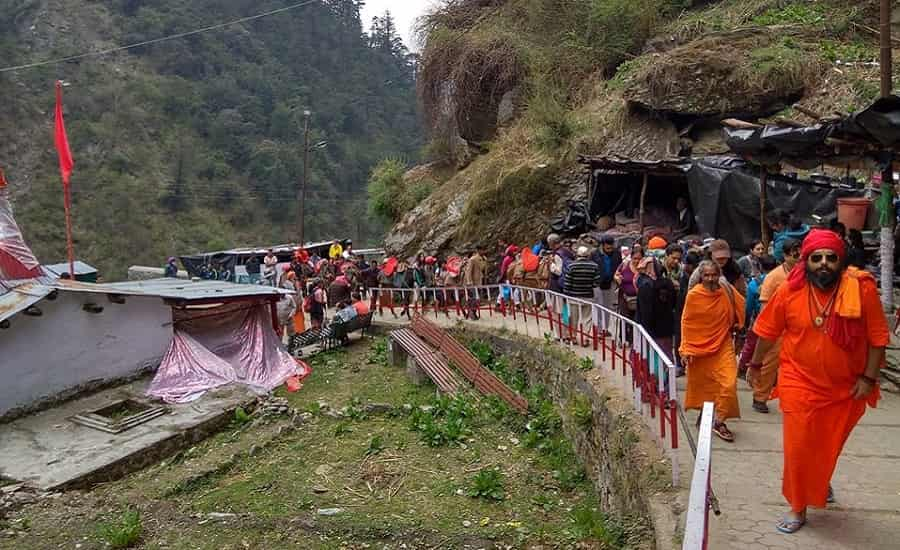
9. Yamunotri Yatra Budget Itinerary
Okay, let’s get practical and map out exactly how to conquer this trip affordably. Here is the focused, cost-effective plan that worked for me:
Day 1: This is mostly a travel day. Your big mission is to arrive in Barkot. This will involve your longest stretch of bus travel, probably starting from Haridwar or Dehradun. Once you arrive, check into a low-cost Dharamshala for the night. You’re looking at a cost of roughly ₹1,500 for your travel, stay, and three meals today.
Day 2: Wake up early! Grab a shared jeep to Janki Chatti. Begin your trek to Yamunotri. Spend a peaceful time at the temple, have your darshan, and trek back down. Return to Barkot for the night. This intense day of trekking and devotion should cost you only about ₹1,000 (mainly for food, small transport fees, and stay).
Day 3: It’s time to head home! Take the cheapest available bus back toward Haridwar or Dehradun. This final day of travel and meals will run you another ₹1,000.
The grand total for your actual time in the mountains? Yamunotri Yatra Budget comes out to be ₹3,500! You can have a transformative experience without needing a huge budget.
If you just want to focus on yatra you can hire any tour and travel company like The Mountain Trekker who will take care of everthing from food to stay.
10. You will come back richer in experience, and that’s what truly matters.
If you loved reading about Yamunotri Yatra Budget, you might also like Chardham Yatra Budget.


Leave a Reply